
📢 Affiliate Disclosure:
This page may contain affiliate links. If you click on a link and make a purchase,
we may earn a small commission — at no extra cost to you.
Our editorial opinions are our own and are not influenced by any commission.
Learn more →
What Are Marketing Automation Tools?
Marketing automation tools are essential for any Shopify merchant looking to grow their business efficiently. These tools help store owners recover abandoned carts, personalize email flows, automate customer journeys, and engage shoppers across email, SMS, chat, and push notifications — without adding extra work to the team.
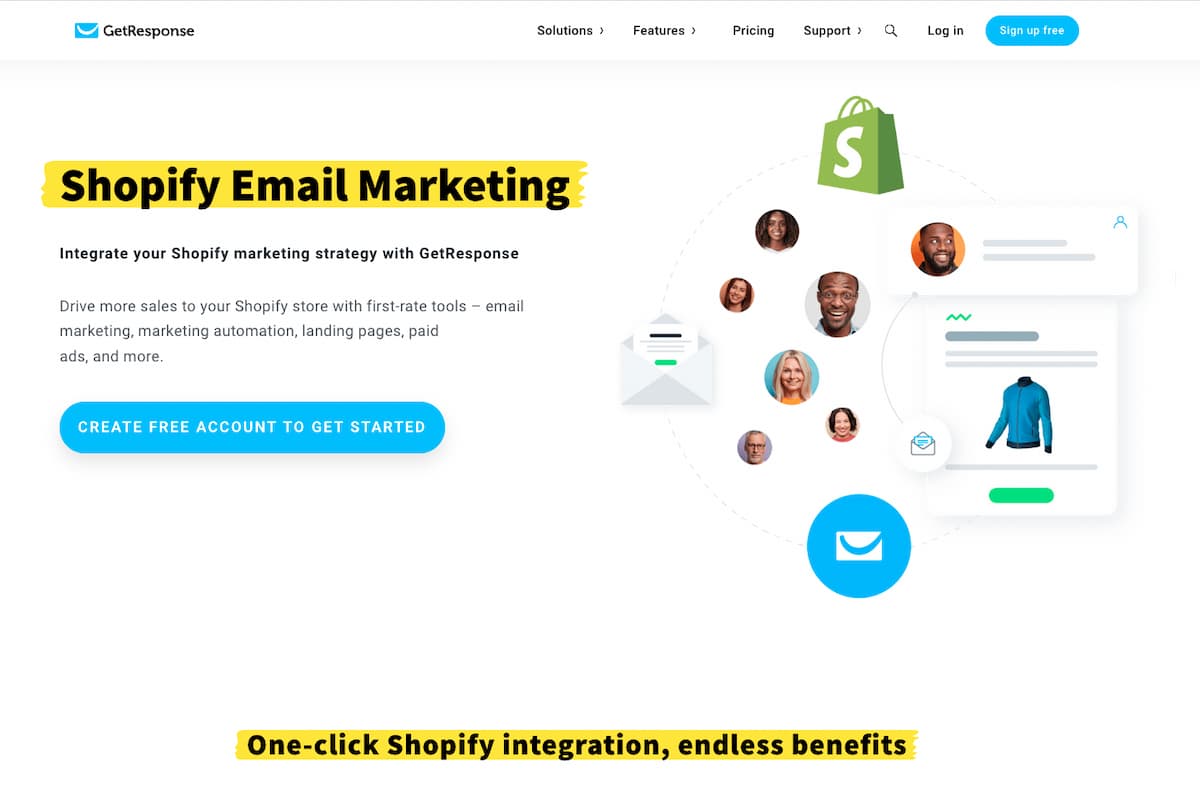
In 2026, the most widely used and recommended marketing automation tools for Shopify merchants include:
Klaviyo: The go-to email and SMS powerhouse for Shopify stores, offering deep data integration, advanced segmentation, and powerful automated flows tailored for ecommerce.
Omnisend: Omnisend prides itself on solid multi-channel functionalities that include sending SMS, emails, and push notifications from a single dashboard designed for ecommerce marketers and retailers. It also features pre-built workflows for welcoming series, product and cart abandonment, cross-selling, and order confirmations.
HubSpot: HubSpot’s Marketing Hub integrates directly with Shopify to provide merchants with a complete, unified view of every customer journey. It syncs customer profiles, purchase data, and store behavior into HubSpot’s CRM, enabling advanced email workflows, smart content personalization, and detailed revenue attribution reporting.
Shopify Email & Shopify Flow (Native Tools): Shopify’s built-in marketing automation tools — including Inbox, Forms, Automations, and Segmentation — are included with Shopify stores on Basic plans and above. These native tools have become significantly more powerful in 2026 with the integration of AI.
Mailchimp: Still a popular choice for beginners, Mailchimp is ideal for Shopify merchants who want an easy way to set up email automations without complex workflow builders.
Why Do You Need Marketing Automation Tools in 2026?
Growing a Shopify store in 2026 requires more than great products — it demands consistent and personalized marketing across every touchpoint. Doing this manually is nearly impossible at scale.
The ROI numbers speak for themselves. Most stores see a 20–40% revenue lift from abandoned cart flows alone, with full automation delivering 3–5x ROI within 90 days.
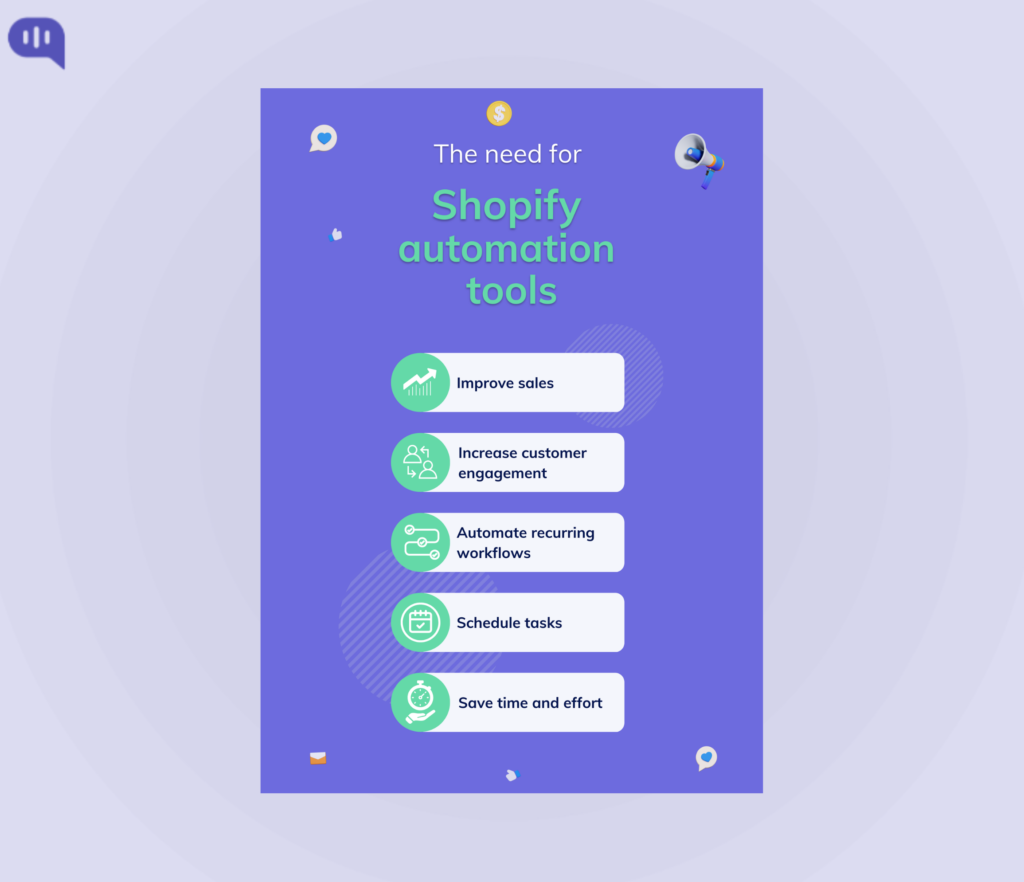
Shopify marketing automation saves time, generates sales, reduces churn, and creates better experiences for customers. With everything managed from one central platform, it’s easier to identify what’s working and adjust your strategy in real time.
How Do You Use Marketing Automation Tools?
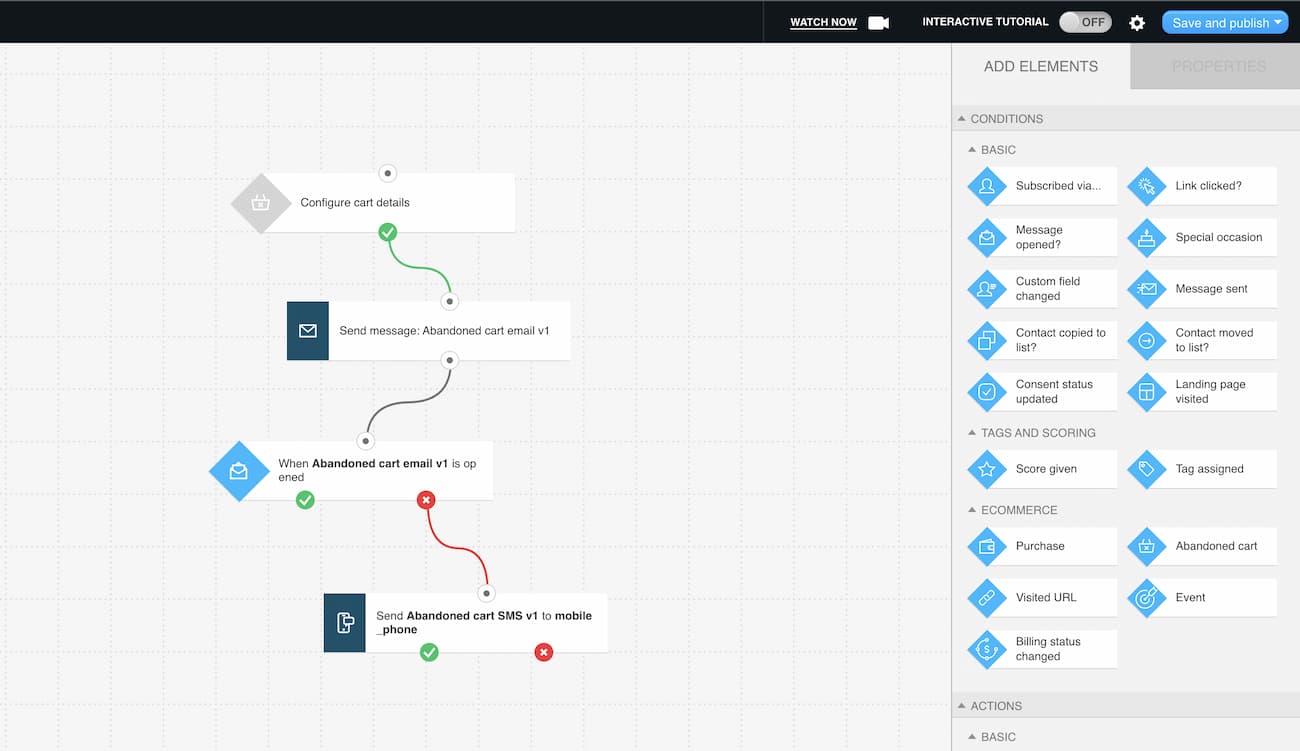
In 2026, Shopify automation is built on a simple but powerful logic: trigger → condition → action. Shopify’s marketing automation tools run on store signals you already have — products viewed, carts created, orders placed, customer tags, and campaign engagement.
The highest-priority flows every Shopify merchant should set up are:
- Welcome Series: Your email automation tool sends a single email or a series welcoming new subscribers following their subscription. The ROI impact is enormous — Omnisend’s 2026 Ecommerce Marketing Report found that welcome messages and abandoned carts drove 76% of all automation orders in 2025.
- Abandoned Cart Recovery: In 2025, abandoned cart emails had a 39.46% conversion rate, behind only welcome emails, making them well worth adding to your Shopify marketing automations.
- Post-Purchase Upsell & Browse Abandonment: These flows either raise average order value after a first win, or recapture intent before the first purchase happens.
What Are the Key Features of Shopify’s Marketing Automation Tools in 2026?

Shopify has dramatically expanded its native capabilities and AI integration. The key features include:
AI-Powered Sidekick & Shopify Magic: Shopify has significantly expanded its AI capabilities, introducing tools that support merchants across the entire value chain — from product creation to merchandising, marketing automation, and store optimization. Sidekick can help build customer segments by describing them in natural language, which lowers setup friction considerably.
Advanced Customer Segmentation: Shopify’s segments can auto-update based on behavior and engagement, which means targeting gets cleaner over time. They also support segmented discounts — a practical way to reward VIPs without blasting codes publicly.
Multi-Channel Messaging: Businesses can create email and SMS campaigns from scratch or from templates, send with flexible pricing, and report on results.
Shopify Flow: Flow makes it easy to build custom workflows to automate marketing, order fulfillment, inventory management, fraud prevention, and more. Merchants report significant efficiency gains, saving 15–20 hours weekly by automating tasks. The visual workflow builder requires no technical expertise, and AI assistance simplifies setup.
Reporting and Analytics: From customer and order data to store and marketing performance, all data is analyzed in one secure, centralized spot, with clear, informative reporting tools that allow merchants to view performance metrics instantly to inform critical business decisions.
How to Choose the Right Marketing Automation Tool in 2026?
With the explosion of AI-powered options, choosing the right tool requires careful thought. Here’s what to consider:
Size of your business: While most marketing automation software has robust capabilities built with ecommerce stores in mind, not all of them will support your businesses equally. Some marketing tools focus mostly on one particular channel, such as email marketing, while others offer a more versatile range of features including popups, transactional emails, SMS marketing campaigns, promo codes, live chats, paid ads, or web pushes.
Budget: Options range from Shopify Email (free for basic use) to Klaviyo (email/SMS powerhouse) to enterprise-level platforms at $3,000+ per month for stores doing $5M+ in revenue.
AI & Integration Capabilities: You’ll want to confirm that your marketing automation app integrates with the rest of your tech stack — whether you’re using Google Analytics, Facebook Ads, or other platforms.
Ease of Use: While AI allows for massive automation, a “human-in-the-loop” strategy is recommended — AI handles the 80% of repetitive tasks, while humans focus on brand strategy, vision, and high-level decision making.
Conclusion
Shopify’s marketing automation ecosystem in 2026 is more powerful and accessible than ever before. Automation improves repetitive workflows, boosts conversions, and delivers timely messages that feel genuinely relevant to each customer. Whether you’re a small bakery using Shopify’s native tools or a large DTC brand leveraging Klaviyo and AI-driven agents, the right automation stack can save hours every week and significantly grow your revenue. The key is to start with high-impact flows — welcome series and abandoned cart recovery — and expand from there as your store scales.
